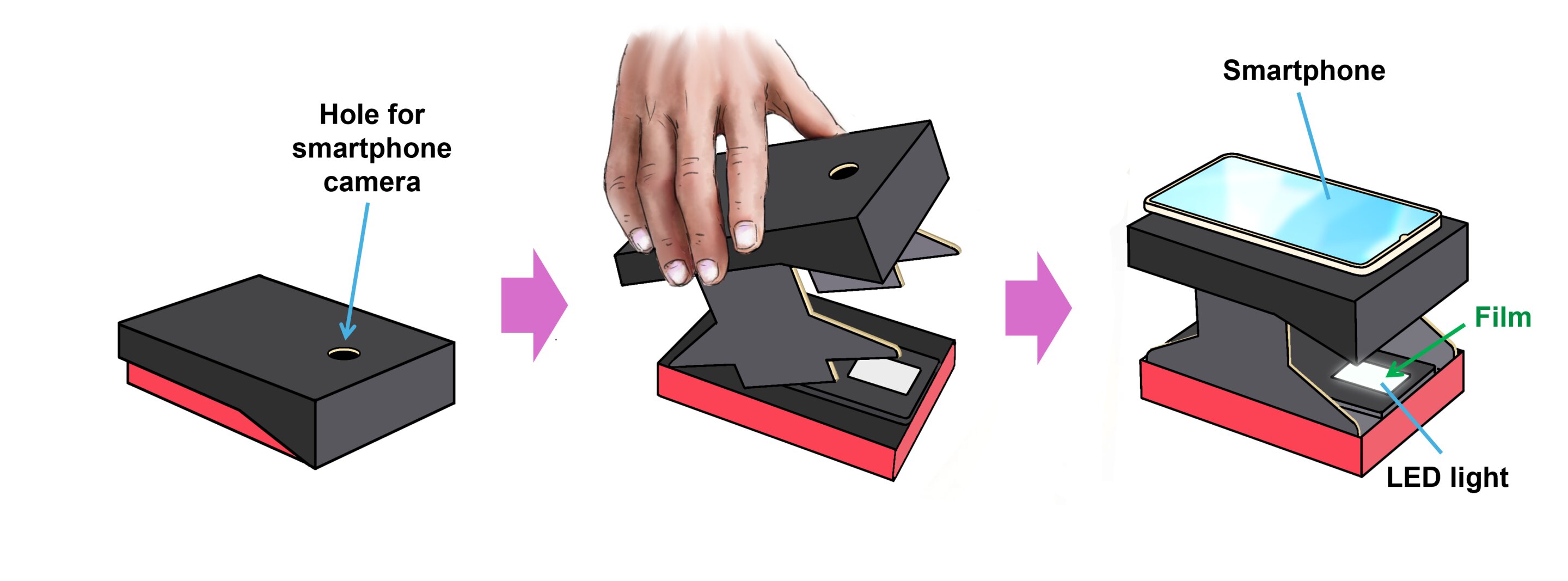
This costs “less than $70”.
You can get a cheap Geiger counter for $50 today and it’s about the same size. I see some for $30-40. These are based on old, proven technology, not some new thing with new unknown problems and an app.
Not that it isn’t neat, but it’s kind of a solved problem.
To put this into perspective, a 10 Gray dose to the skin is high enough to cause permanent hair loss.
A 10Gy exposure is well, well beyond hair loss range and into the fatal within days zone. The LD50 is 5Gy, LD99 is 9Gy IIRC. Methinks the author did not do their research on the topic.
Well, technically the hair loss is permanent if you die afterwards.
Yes, but a cheap Geiger counter doesn’t use AI. Get with the times.
What’s LD50 and LD99?
Other comment is wrong. LD50 = 50% chance of dying. LD99 = 99% chance of dying. The figures I listed are for humans, not mice. LD50 in mice is likely drastically different than LD50 in humans.
The EBT4 film is designed to change color instantly when exposed to radiation, a change that can be detected by the naked eye.
So, why do I need your system to point a digital camera on the film, if I can see the change on the film? Seems like a solution to a problem that was already solved.
It’s not an “if” detector, it’s a “how much” detector. It looks like it’s using the LED chamber to light the film in a consistent way, and then the phone camera measures the color change to quantify how much radiation it was exposed to.
Ah. I missed that. Ok, this makes total sense then. But the films activate at high doses anyway; doses you’ll notice. I guess this system will be especially useful if those films ever become more sensitive.
I guess if you want an automatic alarm, that could be useful.