
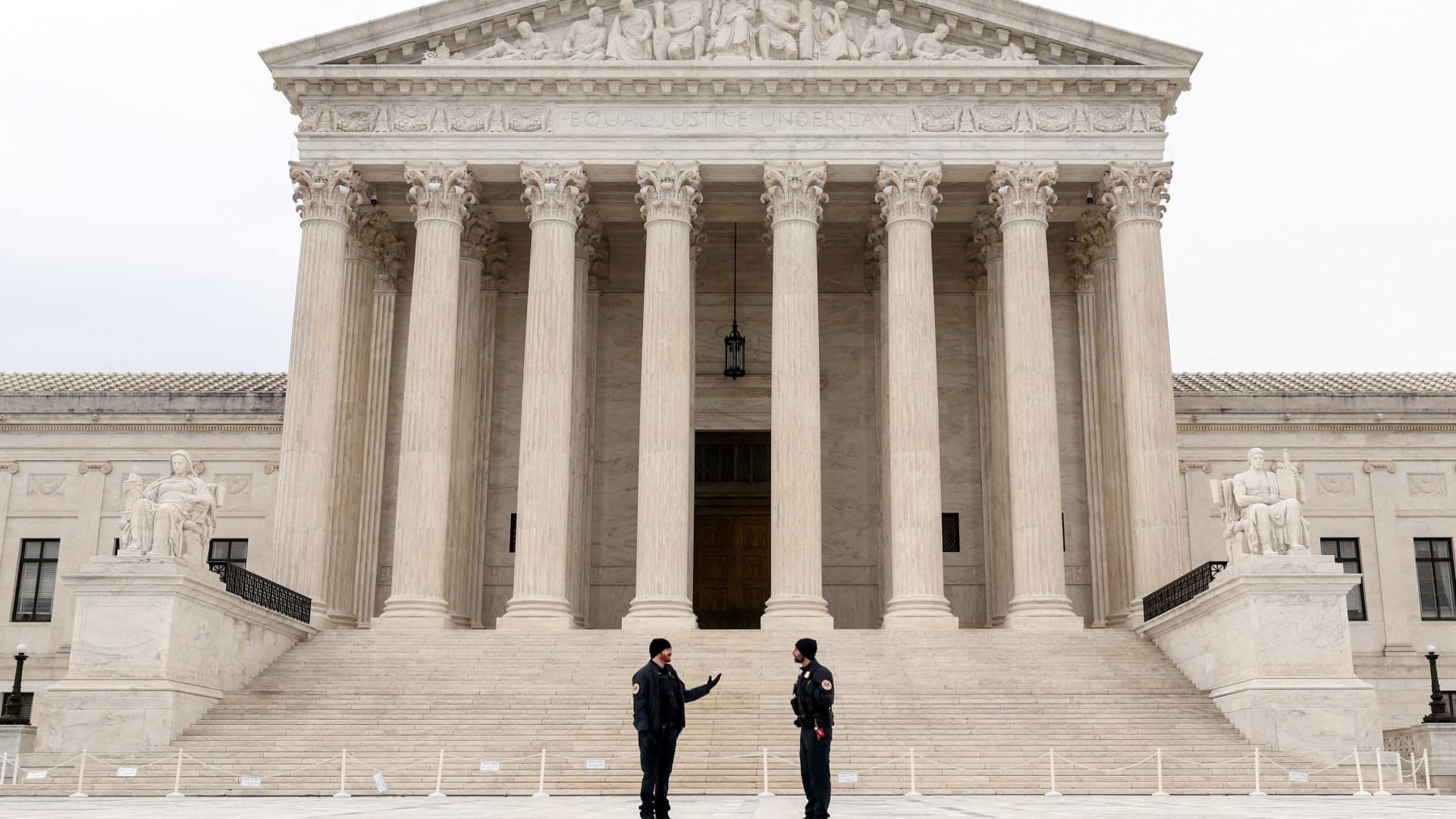
The U.S. Supreme Court declined on Monday to take up the issue of whether art generated by artificial intelligence can be copyrighted under U.S. law, turning away a case involving a computer scientist from Missouri who was denied a copyright for a piece of visual art made by his AI system.
Plaintiff Stephen Thaler had appealed to the justices after lower courts upheld a U.S. Copyright Office decision that the AI-crafted visual art at issue in the case was ineligible for copyright protection because it did not have a human creator.
Thaler, of St. Charles, Missouri, applied for a federal copyright registration in 2018 covering “A Recent Entrance to Paradise,” visual art he said his AI technology “DABUS” created. The image shows train tracks entering a portal, surrounded by what appears to be green and purple plant imagery.
The Copyright Office rejected his application in 2022, finding that creative works must have human authors to be eligible to receive a copyright. U.S. President Donald Trump’s administration had urged the Supreme Court not to hear Thaler’s appeal.
It’s simply not the court’s job to determine this, in this particular case. Which is why it’s so frustrating that this particular case keeps ending up under headlines claiming that it’s established that “AI generated art can’t be copyrighted.”
All the rest of this argument is out of scope of this case, you’d need to look to other cases. You can argue and opine however you like about what you think the outcomes should be but that doesn’t change what the outcomes of those cases actually end up being.