

cross-posted from: https://lemmy.world/post/53250107
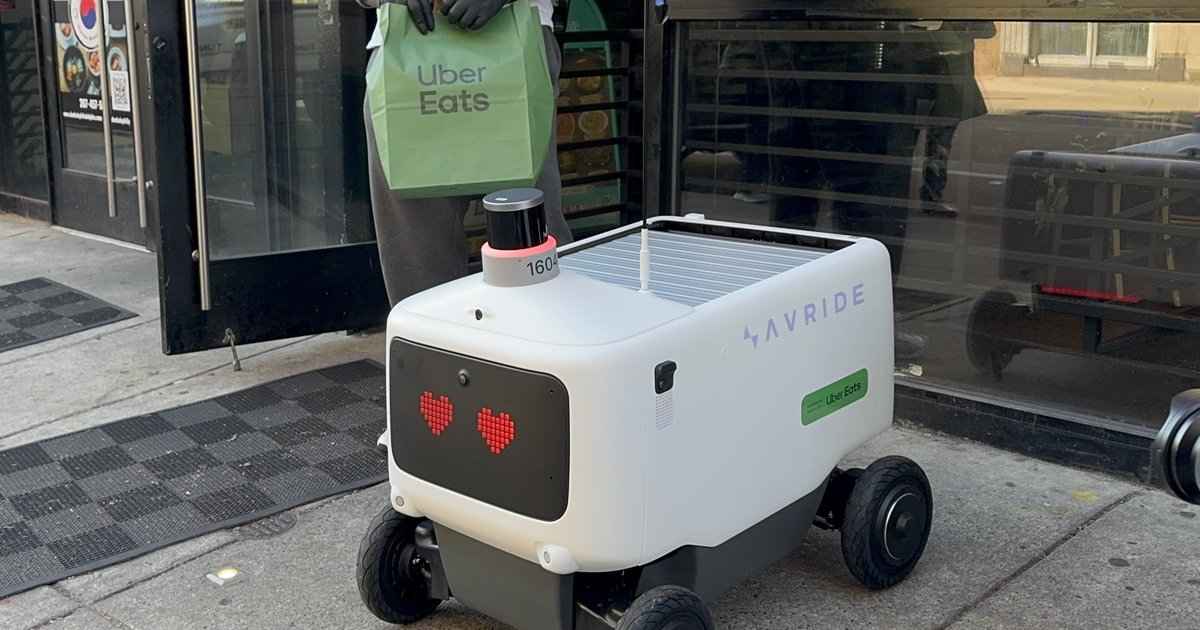
Police confirmed they had responded to a report of “criminal mischief involving a robot” on the 1200 block of Filbert Street around 1:16 p.m. on Wednesday. A woman on the scene ignored “multiple commands” to move, they said, resulting in a criminal violation notice for disorderly conduct.
Uber declined to comment.
Marvin, who plans to contest the charge on the grounds of her First Amendment right to protest, has been undeterred by the arrest. She plans to continue blocking Uber Eats robots and chatting with curious passersby who ask what she’s doing.
“It allows me to talk to people about what’s going on,” she said. “It’s always very interesting conversations that we have, and I think it’s good to have those kinds of conversations in public space.”
More important make it fair. Robots or anything with ai has to pay the same amount of taxes as a human.
Isn’t it usually taxed when the company buys a robot? Robots are expensive so the tax is high although it is only upfront. The other taxes that I can see are taxes paid for by the paid crew maintaining the robots (very unlikely that a robot will maintain another robot in today’s time) and taxes paid by the people who buy food through Uber during checkout.
Don’t know about your county but here buying does not come with taxes. All taxes paid are given back. Value added tax. Or what tax are you talking about?
That the company still hires people does not invalidate my claim that currently human labor is more expensive because of the taxes and social contributions.
If your arguments then shift to it does not need to have social contributions because it does not need those. then I would go further. A robot does not need to do anything for humanity and companies can put robot waste directly into the environment. Put pollution’s into the air as it does not need it too.
I think the robot problem is more influential to reduction of factory workers due to robots as manufacturing creates more value. For logistics, people love their free shipping and most of the time, companies pay very little to the delivery staff for cost reduction to achieve the free shipping. In this case, robots might actually be more humane for cheaper deliveries than delivery staff in minimum wage. People get their free shipping while no human becomes a sacrifice for that free shipping. If people really want wages and do not want robots to takeover, people should be willing to pay up for delivery fee which will unlikely happen.
I don’t think the robots get paid. They’re forced to work for no pay, just like people used to.
I don’t know if OP edited the comment after your comment, but I think it’s pretty clear that OP means that companies should have to pay the same taxes that a human employee would pay per robot. IMO, that doesn’t go far enough because it leaves out the secondary spending that sustains the local economy, like spending on groceries, other goods, and services.
Uh… and what about current machines? When do they even become a robot?
When a momma robot and a papa robot love each other very much…
There’s a lot of automation that has taken people’s jobs. It goes back all the way to the Luddites.
I think taxing them per robot misses the point. The real problem is that companies monopolise the means of production and privatise the profits from increased productivity. Worrkers barely benefit from their own increased productivity. That’s the real problem.