

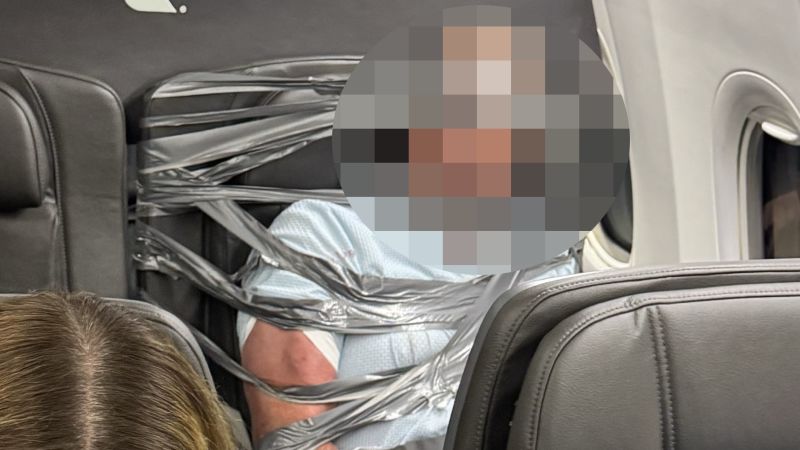
A disruptive passenger was restrained with flexible handcuffs and duct-taped to a seat as his flight was diverted to make an emergency landing in Baltimore Thursday night, photos and video from other passengers showed.
Richard Olenick and Juan Mejia were more than halfway through the flight when a man two rows behind them in the first-class section started to become belligerent, Olenick said.
A flight attendant tried to control the situation but the man got increasingly agitated, started to hit the passenger next to him and then hit a woman who tried to intervene, Olenick said.
That’s because it was originally ‘duck’ tape, due to it being made from duck cloth. After WWII the GIs back home from the war had liked how useful it was, and so used it for general repairs, including sometimes taping up air ducts, from which it got its more commonly-known name.
I have no idea if this is true but it’s inconsequential so I’m going to choose to believe it.
Did you know that it was originally a band aid for combat situations?
Also that nowadays the industry massively prefers gaffer tape cause it can be removed without leaving a mess.
Gaffers tape is pretty much just non-water-resistant duck/t tape, you see it used a lot to hold cables down in theaters and concert venues. I’ve only ever seen aluminum foil tape used for duct joints and repair.
X
From Wikipedia:
The first material called “duck tape” was long strips of plain non-adhesive cotton duck cloth used in making shoes stronger, for decoration on clothing, and for wrapping steel cables or electrical conductors to protect them from corrosion or wear. For instance, in 1902, steel cables supporting the Manhattan Bridge were first covered in linseed oil then wrapped in duck tape before being laid in place.