

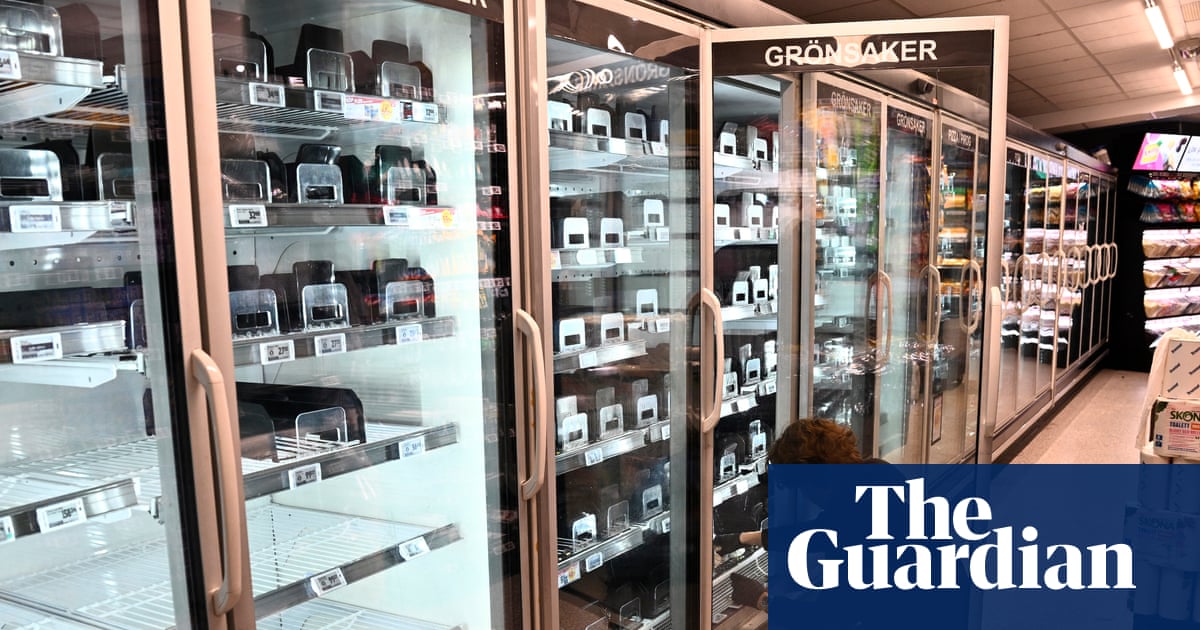
Chains in Sweden, Belgium and Luxembourg say fridge temperatures rose overnight, similar to hack of French stores
Supermarket chains in Sweden, Belgium and Luxembourg have said the temperatures of their refrigerators and freezers in dozens of stores rose overnight, prompting fears of a cyber-attack similar to one that caused millions of euros of food losses in France.
Sweden’s Coop chain told the daily Aftonbladet on Monday that six of its stores had been affected, while ICA said it was “aware that a limited number of stores were affected by an incident overnight which impacted their refrigeration and freezer systems”.
They are grocery stores, not some break room fridge. This attack is both economic (for the spoiled food that needs to be thrown out and the price increase that will come with that reduced supply) and on health (because not all spoiled food will necessarily be recognized as such in an effort to avoid the first consequence, plus if the fridges containing milk go warm for a few hours, they can test some milk and it’ll probably still be fine, but that best before date is now likely useless at best or misleading at worst). Also, even if most food is fine, if some food isn’t, it will mess with some people’s heads pretty badly.
If the intention behind the hack was disruption and damage, IMO this is one of the more effective angles they could attack.
Milk will not have any problems if it was not opened in the first place
Milk will have problems if it’s the 50c fast-defrost cycle that the fridges in the first attack reportedly hit.
Oh yeah i guess it might have problems then
If that was the case, why do they spend so much money on keeping it refrigerated before people buy it instead of being kept on normal shelves with all the other “refridgerate after opening” foods?
Depends on the kind of conservation method they applied to the milk. Milk that was sterilized at lower temps is considered “fresh” and has to be kept refrigerated. Milk that has been pasteurized at higher temps is sterile and won’t cause bacteria to grow even if it’s kept at room temp.
This however changes when you open the milk and it enters in contact with microorganisms that are naturally present in the atmosphere and that can proliferate in the milk; to avoid this, you need to keep milk at fridge temps so bacteria won’t grow too fast (if you keep it open in the fridge for too long, bacteria will grow anyway and the milk will go spoiled).
Idk in other places but here where i live, many supermarkets keep it outside the fridges ¯_(ツ)_/¯
Ah interesting. I know eggs can be (though the industrial washing they get changes that by removing an important protective layer), but figured the few times I got milk that went bad before the best before date it was because it wasn’t properly stored before I got it.
Might depend on the pasteurization method maybe? Like the “bring it close to boiling” doesn’t kill everything in it but the chemicals might? (Speculation)
Edit: apparently it has to do with the temperature it is pasteurized. There’s one version, most common in north America, that pasteurizes at slightly under a boil, which doesn’t kill everything in it and requires refrigeration before opening.
And then there’s UHT milk, which is pasteurized at 138°C, and this apparently kills everything such that the milk doesn’t need to be kept in the fridge until it is open, and is more common in Europe and parts of Asia.