

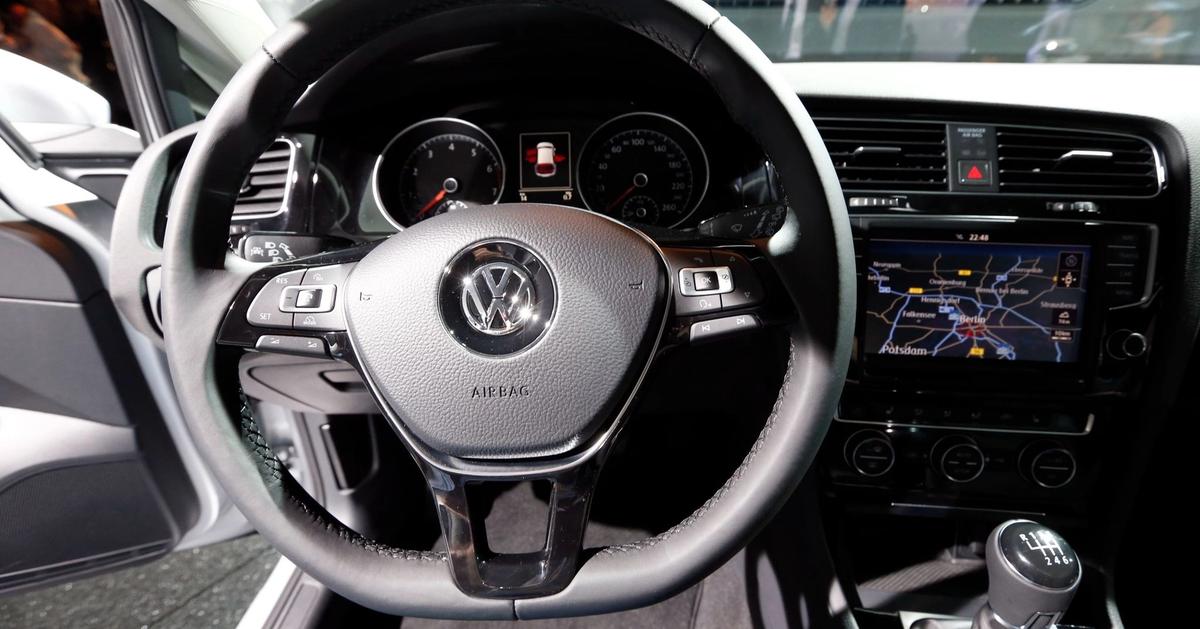
Volkswagen will restore physical buttons to the dashboard in its latest compact car, part of a wider move away from touchscreens.
In a particularly retro touch, the new ID Polo will even have a volume dial.
For a decade or so, automakers rushed to replace knobs and switches with screens, Autoblog noted in October, but users largely disliked them: Controlling the air conditioning, for example, required delving through submenus while driving, which was both difficult and dangerous. Research found that using touchscreens took longer and distracted drivers.
Hyundai, Mercedes-Benz, Porsche, and VW have all announced plans to return to more tactile controls, and US and EU regulators announced last year that cars with touchscreen controls could get worse safety ratings.
I agree with all of this except the end.
People absolutely asked for AI. I hate it, but it’s false claiming it wasn’t desired. Tons of people in STEM fields dreamt about it for years.
The people wanted actual reasoning AI, not generative AI. They didn’t expect us to devote most of our nominal economic activity toward a few big tech companies to get it. They didn’t expect them to assert that text generators are ‘reasoning’ and when called on it declare that it’s not reasoning as humanity has known it, but here’s some buzzwords to justify us claiming it’s a whole new sort of reasoning that’s just as valuable.
Even though it’s not intelligent at all, chatGPT seemed groundbreaking when it arrived. Big promises were made and implausible amounts invested, and it doesn’t really seem to have gone anywhere since. It’s the same thing, just a bit better.
And I’d be more ok with LLM technology in general if not for:
In and of itself, ok a neat little trick with some utility so long as it isn’t taken too seriously.
Well… We still don’t have AI. We got language and picture generators…
And I never said we did, so what’s your point?
Not a native English speaker but “dreamt” is past tense, so they stopped dreaming, implying they stopped because now we have “AI”.
If they used to dream something that they are still dreaming about, it is still “dreamt” in past-tense.
If I still “play” baseball every day, and I referring to a game, I say “I played baseball,” because it is in the past. You would not say “I play baseball game last week” even if you are still currently playing baseball.
Make sense? I mean this politely too, you mentioned English not being your first language.
deleted by creator
Wrong. See the Nobel Prize to Google Deepmind team.
Prediction and pattern recognition is not general AI. This is just what LLMs and image generators do. They find plausible continuations starting from a noise to better fit the disired outcome. They don’t have real contextual knowledge about a domain. To them everything is just numbers that can be manipulated until they fit better. They don’t just instantly know the correct or incorrect answer because of a deeper understanding on the matter.
I’m in STEM and have published a few AI based papers. I don’t want this in my house, car, or healthcare.
That’s great, and I am also in STEM and agree with you. But we’re only two people.
Yeah and I’ll counter-vote one of you.
I’m familiar with the use and the limitations of LLMs so I’m familiar with use cases where it adds value and where it should not be allowed
Realistically the biggest issue for consumers is privacy: most of the generally available LLMs hoover unprecedented quantities of personal data. But they don’t have to. There are choices that respect your data
There’s an underlying dystopian theme here that goes beyond LLMs and voice assistants where the technology for collecting personal data keeps getting more intrusive far beyond the nightmares of the general public. They have no idea how much they are losing and the harm it can do
I agree 100%, but the fact still stands that plenty of people absolutely want it, even if they don’t understand and are wrong about what it is.