

In the Lord of the Rings fandom there’s a persistent debate whether balrogs, or Durin’s Bane specifically, have wings. The text in Fellowship is ambiguous whether what it is describing are literal wings or something else wing-like.
In the Lord of the Rings fandom there’s a persistent debate whether balrogs, or Durin’s Bane specifically, have wings. The text in Fellowship is ambiguous whether what it is describing are literal wings or something else wing-like.
Mycology is full of them which are mostly the result of genetic sequencing and the good old “where do you draw the line between species” question but a recent and high visibility one is the Collybia shift.
Before genetic testing, Collybia was a genus characterized by smallish pale-spored mushrooms with convex caps, no ring, and gills which are broadly attached to the stem (the simplest shape the average person would imagine for a mushroom), this became one of the classic “statures” of mushrooms “Collybioid”. As we sequenced Collybia species, they were slowly moved into other Collybioid genera like Collybiopsis and Gymnopus. Eventually this resulted in most of the Collybioid mushrooms being moved out of Collybia, leaving only the earliest-discovered mushrooms in the genus which were tiny parasitic mushrooms that weren’t really Collybioid at all.
Here’s an average “Collybioid” mushroom Gymnopus sp.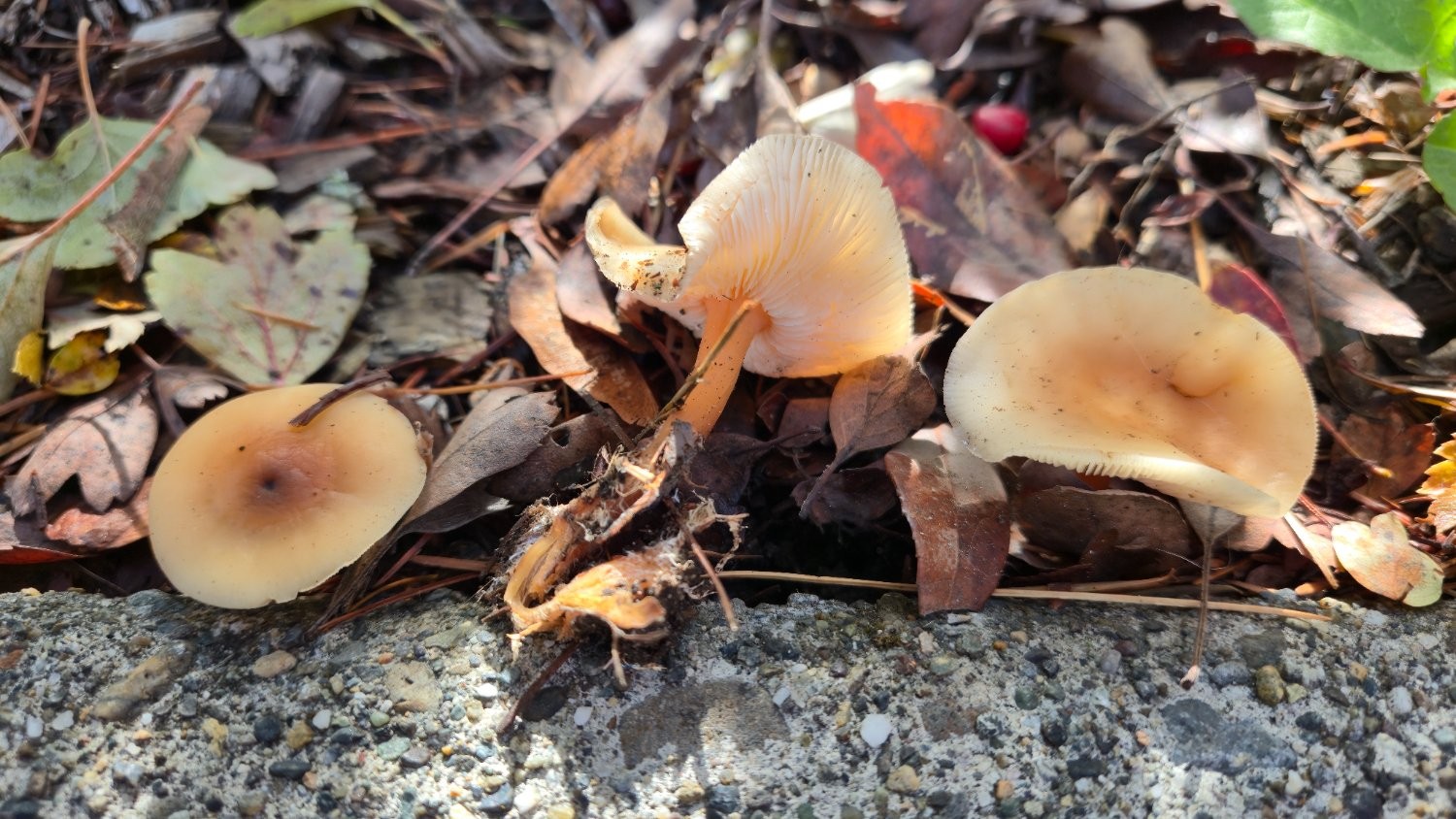
Then things got worse, a recent paper did a study on genus Clitocybe which is another genus which has a classic stature named after it, “Clitocyboid” which refers to smallish pale-spored, funnel-shaped, mushrooms with gills that run down the stem. This paper discovered that nearly everything we had been calling “Clitocybe” actually belonged in Collybia meaning that most mushrooms in Collybia are now Clitocyboid instead of Collybioid. This has resulted utter chaos which has some mycologists considering invoking the “common usage” rules in taxonomy to put the new Collybias back into Clitocybe to make things less confusing. This chaos has been compounded by the fact that iNaturalist has already accepted this name change, but only for the mushrooms explicitly studied in the paper and not their known relatives which has resulted in the Blewits being split between Collybia and Lepista (which itself was a recent name change from Clitocybe that everyone was still adjusting too).
Average nondescript Clitocyboid (no ID because these are nearly impossible):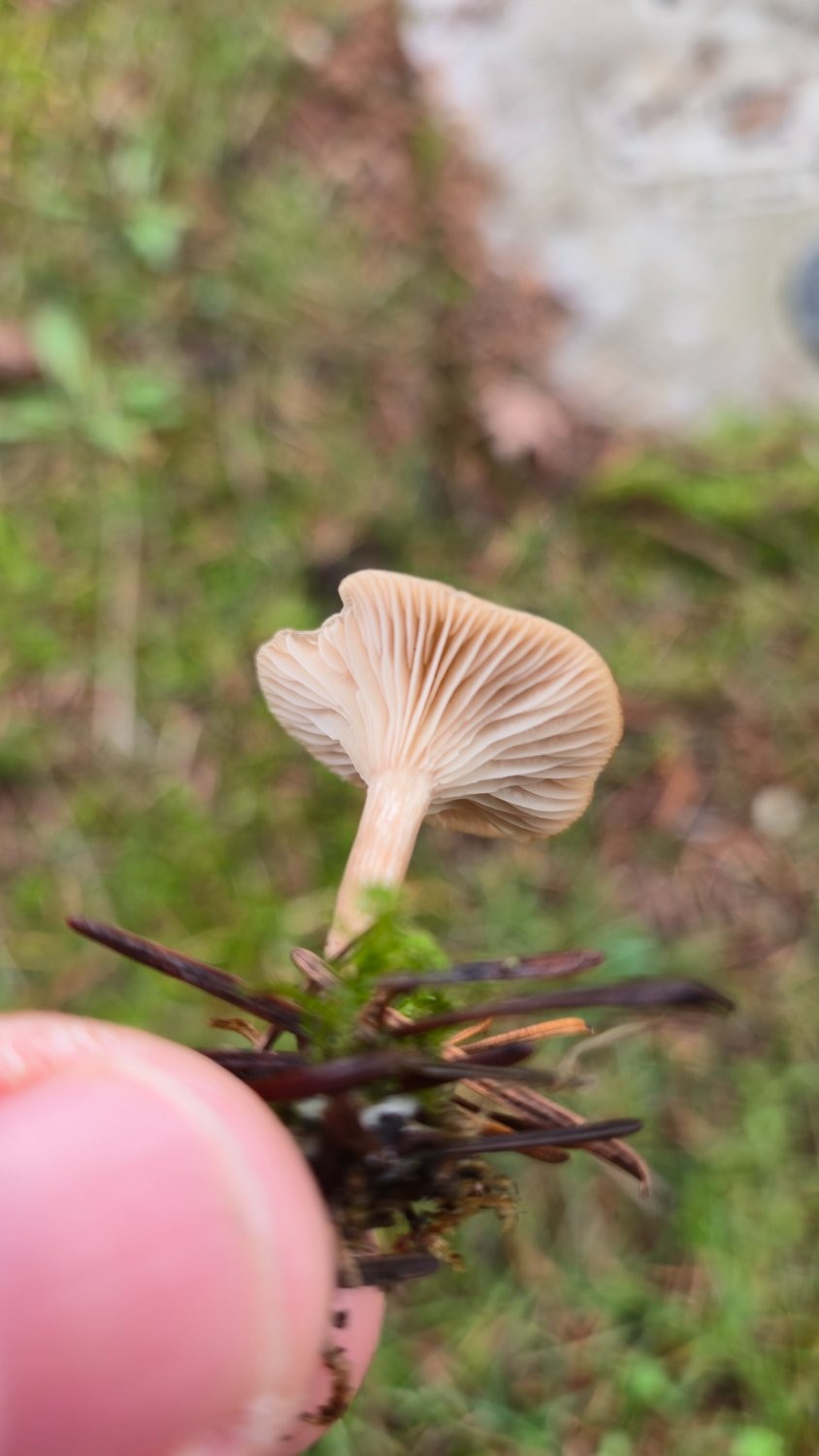
A Blewit, AKA Clitocybe/Lepista/Collybia nuda:
This is honestly fascinating.
alot of plants phylogeny is like this, they looked similar enough they are the same species, after doing enough testing, mostly mitochondria, choloroplast they actually are combined into one genus or move into another one. my favorite is mycoheterotrophs(plants that are entirely dependant fungi rather than photosynthesis), thismiaciae was originally though to have evolved in burmannia family,and then thier own family and then back again. finally in the 2020s they realized even thismiacae is polyphyletic. so now south americans thismia’s are likely belonged to another genus entirely(they havnt done significant phylogenetic studies in the SA ones)(seperate from the ones in south east asia, australia, and 1 extinct one in usa which makes it very unusual for it to appear in america), thismiacae is now a full family, and afrothismia was originally included in thismia, until they genetic testing, its entirely “new family” interdependently evolved but related to the ancestors of thismia. trying to trace lineage of mycoheterotrophic plants is difficult because they lose thier cholorplast genes quite easily.