

Milestone marks years of government spending that grew under both Donald Trump and Joe Biden
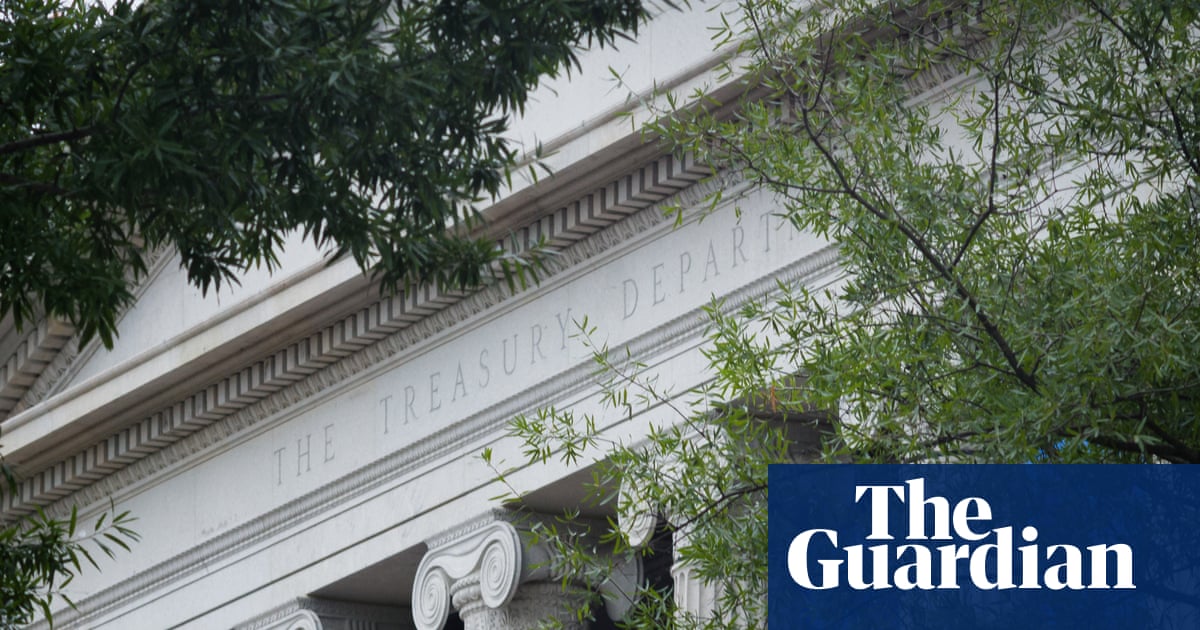
US debt reached $40tn for the first time on Wednesday, the US treasury department said, after the government deficit doubled over the last decade.
The treasury’s latest debt balance showed $40.047tn on Tuesday afternoon, the highest in US history.
The milestone marks years of government spending that grew under both Donald Trump and Joe Biden. During his first term, Trump approved $8.4tn worth of debt, with a huge chunk going to Covid-19 relief spending, while Biden approved $4.3tn worth of debt, according to the Committee for a Responsible Federal Budget.
So, what happens when we start defaulting on our loans?
It sort of depends on what you mean by defaulting on loans. That could mean a few bonds are late being paid out or that whole interest payments are missed.
Regardless a default would risk things like (even more) rampant inflation or skyrocketing interest rates and even in the best case scenarios would likely make it very expensive to borrow money going forward.
You can’t default when you can literally just print more
Good luck buying food with the hyperinflation that’ll cause
I had an Econ professor in grad school who walked us through the calculation for exactly how much inflation it would cause to print enough cash to completely wipe the national debt. Granted this was 10 years ago, so it’d probably be worse now, but it was shockingly only ~15% inflation. That’s high, but not hyperinflation high. Especially since there are national interests in there having outstanding debt, so we’d never actually want to pay it all off like that.
Did the Econ professor also talk about the knock-on consequences if we did this? “Printing money” devalues the currency. Yes, we’d be honoring our debt holders by paying them back in the same number of dollars we borrowed, but our actions in doing this would be handing them back dollars worth significantly less than the dollars they handed us initially. We’d be financially burning every US Bond holder in the entire world (and many of those being US citizens holding government debt).
No one in the entire world would ever lend us money again at the cheap rates we get today. That would cost us trillions of dollars in additional interest we’d have to pay on future debt because the risk of us firing up the money printer would be priced into the very high interest rates investors would demand to buy US debt after that.
Even if you own the money printer, you can effectively default if you print too much money. The result of overprinting devalues your own currency so much that it reaches insolvency.
Exhibit A:
In 2008 the government of Zimbabwe experience hyperinflation when the country tried to print piles of money to pay back its debts. Each subsequent printing devalued the currency even more until they were printing 1 Billion dollar notes.
Exhibit B:
Germany’s Weimar Republic in 1923, saddled by WWI payback debt, ran the money printer full blast devaluing the Reichsmark currency to the point of it being worthless. It included them printing the 500 million mark notes: