https://en.wikipedia.org/wiki/Elliott_803
Another unusual feature is the use of magnetic cores not only for memory but also as logic gates. These logic cores have 1, 2 or 3 input windings, a trigger (read) and an output winding. Depending on their polarity, current pulses in the input windings either magnetise the core or cancel each other out. The magnetised state of the core indicates the result of a boolean logic function.
Huh. Clever.
A picture similar to this one was on one of my high school text books. Inside the cover was a description of it as magnetic core computer memory. For quite a long time I thought this is what computer chips looked like. The only issue was I was in high school in the 80s, long after such memory was used. Maybe the text book was 15 years old, I don’t know.

First computer company I worked for was still using it in the early 80s. Slow, but it retained state after a power failure.
Check this out. Very cool.
I knew this was gonna be polymatt! What a great vid.
TL;DW: He makes a memory core from “scratch”
Though not a fan of his reasoning to have it in silicone oil. The computers back then also didn’t do that, and they had rougher measuring tooling.
He just wanted a oil-submerged thingy anyway.Yeah, absolutely. Just a fun and cool project.
Good God has it been 11 years since that meme?

Gangnam style is 14 years old
Ok that’s uncalled for sir.
Sorry, I’m 14
AI was 59 in 2015
It’s been 84 years…
Now you can wear a full desktop PC on your wrist with 0.7nm chip
Well, it’ll be a pretty small chip if the entire thing has to fit on your wrist, so still not equivalent to a 0.7nm desktop chip. They don’t generally make the chips smaller, the feature size gets smaller so they can fit more transistors in the same die area
if that’s truly from 1957, the whole setup would have several pieces that size. the 803 a few years later was three (one about this size, two a little smaller), plus user console, printer, tape reader. nearly 2000 lbs worth of equipment.
To be fair the Pi has no peripheral (keyboard, screen…) either.
You really doubled down on that pun. There should be a law about that.
Careful, you might get that Murphy guys attention with this law talk.
It’s crazy how much smaller people were back then.
Yeah. It’s because of improvements in agriculture. It made food cheaper, and people got taller.
Yes, I heard our size and population doubled every two years. It’s called Morsel’s law iirc.
Seems to have plateaud out now though.
Also don’t forget the effects of thermal expansion brought on by global warming.
I like the idea we’d all be modern day nephlim giants if it weren’t for global warming
That’s the same size box my new video card just came in.
and all that was inside was a smelly shoe with a can of soup stuffed in it. thanks amazon.
You could just do the soc, it would probably be closer to feature parity.
Not an electrical or computer engineer so I can’t really speak on the limits of miniaturizing hardware in terms of physics or technological ability. But even if you can fit a full computer on a fingernail, it’s gonna be hard to have a even just a USB-C connector on a finger nail. At a certain point, there’s little reason to miniaturize computers further when they still have to interface with human usable devices. Instead of miniaturizing the board further, continuing to increase transistor density on the cpu and chips to get more compute power in the same area seems like the obvious focus for future miniaturization efforts.
I think this is also a part of the OP picture. I bet the raspberry Pi is vastly more powerful than that Elliot computer cabinet.
Yeah, not even close.
That’s an Elliott 405 computer. It could perform up to 500,000 instructions per second, aka FLoating-point Operations Per Second (FLOPS).
The other is a Raspberry Pi Zero which can perform 250,000,000 FLOPS, 500 times the Elliott 405.
And, the Elliott 405 cost between 140k-350k in 1957, depending on the features and configuration chosen. With inflation to 2015 dollars, that’s $1.2-2.9 million ($2.40 per 1 FLOPS)
The Raspberry Pi Zero was their new low-power, low-cost board in 2015. It only cost $5 in 2015 (50 million FLOPS per $1)
And for an extra 30 bucks ($35 total) in 2015, you could have picked up a Raspberry Pi 2 Model B, which is capable of 24,000,000,000 FLOPS. That is 96 times faster than the Pi Zero, and 48,000 times faster than the Elliott 405. (~686 million FLOPS per $1)
Positive example of a shrinkflation.
You have the ESP ones, hard to go much much lower without it being impractical (but there are loads of smaller too).
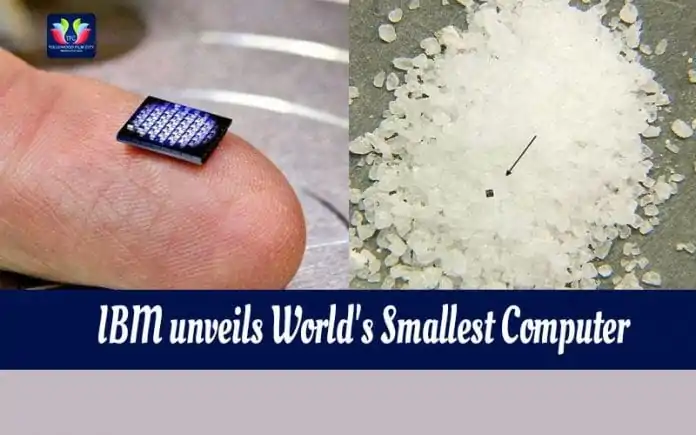
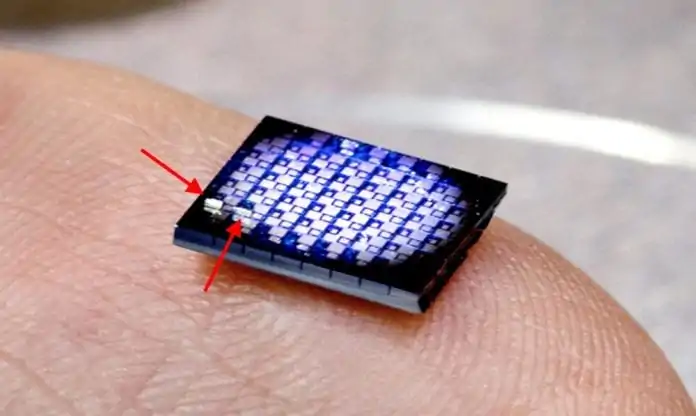
Some jokes never stop being accurate.
The modern version of this is AI datacenters.
In an amount of years all the crap they are taking up tons of racks for will fit in a cell phone and cost next to nothing.
We might need some new tech instead of shrinking existing tech.

Yes, that’s neuromorphic computing. Once we properly figure our how to make semiconductor neurons and how to connect them to each other in a big scale, AI will hopefully be less of an energy waste. The current approach with mapping these problems into GPUs is highly inefficient.
You could replace that SBC with microcontroller.