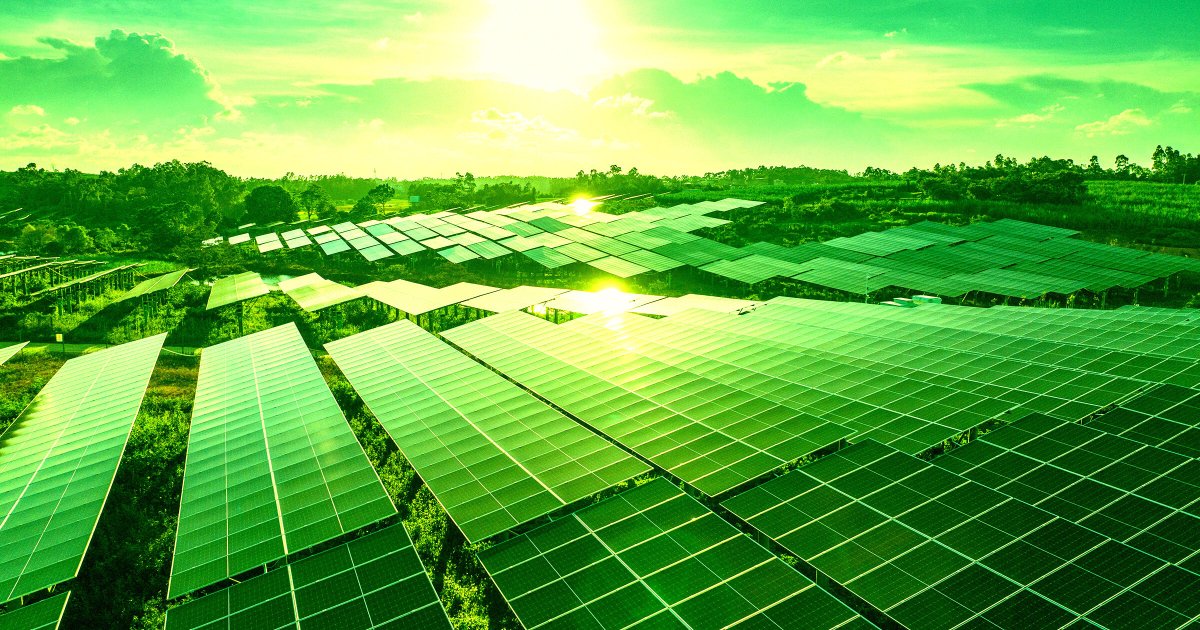
Nuclear plants - with high start-up costs, national security risks and high output - will always require concentrating large amounts of power in few hands.
Solar has much greater potential for decentralization.
Greater inequality results in a worse society in just about every imaginable way. And nuclear will always encourage that more than solar.
Now we just need a cheap sustainable storage medium for all that solar power and were golden. Anyone?
That’s an argument from 2017. Today the Technologies are there, and we can build it on scale. Battery for short term, green gas for the longer term.
Batteries would like a word. They’re already storing solar power, getting cheaper, and improving at a pace nuclear construction schedules can only dream of. For longer gaps, pumped hydro and thermal storage can pitch in. Turns out the answer isn’t one magical box, but a bunch of technologies that actually exist.
From what I know, for large scale solar farms, batteries arent there yet. The maintainance and replacement costs cut into the money saved by using solar by quite a lot.
From what I know there are many many many such projects in the permit phase in Germany, all of them run on capitalist interest without state funding. The only thing between now and them getting build is our government which seems to prefer a 180° turn into the fossil age.
For long term storage most countries will need more than pumping hydro. But green hydrogen can be produced from wind and solar to use in times of need in claasic power plants adapted for hydrogen. This technology also exists. But it is very inefficient, so should and will he used only as a backup.
Hydrogen is also a huge pain to store. It’s really hard to keep it from leaking.
But it can be stored as Methane in exactly those containers that many countries already have at a large scale for their winters.
Adding to the other answer, for longer lulls in energy generation, the power can be used to create hydrogen gas that can be burnt in gas plants.
So, why isn’t everybody building hydrogen burning generators?
Because hydrogen-ready power plants are not the same as natural gas power plants, as hydrogen gas is not a drop-in replacement for natural gas. And right now, when natural gas is still relatively cheap and renewable energy is not yet absolutely dominating the energy mix, politicians are fearing the cost of building the infrastructure for generating, transporting, storing and burning hydrogen gas.
In the future, hydrogen gas plants promise to be the best fit to pair renewable energy with, but right now the cost of it and the availability of fossil fuels do not force the hand of the people responsible for planning the future of the energy grid.
Right, because hydrogen is not working. It’s expensive to produce but most importantly incredibly hard to store and very dangerous if it catches fire.
Hydrogen works, as do pump-storage plants.
No, it does
doesnot. If it did, we’d have it everywhere.Yeah, yeah, same arguments as with solar, too expensive, not feasible, yadda yadda. Always the same.
No, it’s different with hydrogen. If you want green hydrogen, you’ll waste at least 50% of energy. Then there are storage and flammability etc. We have everything we need for using hydrogen today, but somehow it is not used besides minor experiments.
Yeah, but does energy waste matter if the other option is that you turn wind or solar input off? It should not run during high peak, of course, but if there is more energy in the grid than it uses? Turn it into hydrogen.
And storage, strangely that safety topic never gets raised with nuclear. If we can build safe nuclear, we can build safe hydrogen storage.
If we can build safe nuclear, we can build safe hydrogen storage.
They’re facing entirely different problems.
Turns out the sun has a few competitive advantages over nuclear: free fuel, no radioactive waste, and it doesn’t need a decade of permits before it starts shining. The real bottleneck now is grids and storage. Imagine losing the energy race to a giant fusion reactor 93 million miles away. 😎
It has its issues, but yeah currently it is the cheapest source of power, it got so cheep that individuals can build their personal power plant for their home.
And we still have idiots fighting it. Even if you don’t care about environment (you are “drill baby drill” kind of person) it still makes sense economically.
The real bottleneck now is grids and storage.
And turns out nuclear has a few competitive advantages over solar. They are both great and serve different purposes.
Nuclear’s big selling point is that the sun goes down. Batteries have apparently missed that memo: they keep getting cheaper, better, and more efficient. Storage won’t solve every grid problem overnight, but pretending today’s limitations are permanent is a strange way to plan tomorrow’s energy system.
another big selling point of nuclear is it’s easy to drop in at old coal plants that already have grid connections ready to go.
pretending today’s limitations are permanent is a strange way to plan tomorrow’s energy system.
how long are you willing to wait for perfect energy storage?
obviously battery tech will improve, but the point is we cannot afford to assume that problem will be solved 100%, meanwhile experiencing more and more irreversible damage to our environment. We need to put our eggs into all clean energy baskets to get off CO2 as soon as possible. Not whenever battery tech happens to be ready to handle everything.
Nobody’s asking us to bet on miracle batteries: Wind and solar paired with storage are already cheaper than building new nuclear. Reusing a coal plant’s grid connection doesn’t magically make a reactor cheap or quick to build. If speed and CO2 matter, follow the numbers, not the nostalgia.
“Cheaper” is not the most important metric.
In your world, is “tomorrow’s energy system” exclusively solar/hydro?
No, in my world tomorrow’s grid uses whatever delivers reliable electricity at the lowest total cost: solar, wind, hydro, geothermal, storage, and yes, nuclear if it can compete. This isn’t a religion with approved energy sources. It’s an engineering problem with a price tag, and nobody gets bonus points for glowing in the dark.
Exactly, this is an engineering problem. You’re talking it like it’s an accounting one. Reliability, emergency use, redundancy, generating potential and universal scalability are the most important factors. Cost is a completely separate issue governed by separate factors, many of which are 100% artificial.
You’re stringing worlds together at this point.
Cost is the single largest factor in the deployment of new power plants, and solar is just impossible to match right now.
You could spend literally decades and billions building a nuclear plant, or start deploying solar right this minute and immediately reap the rewards of that investment.
It’s a no-brainer.
nobody gets bonus points for glowing in the dark.
where the fuck did anybody say that?
“Glowing in the dark” refers to nuclear power sources. Hope this helps.
Nuclear is simply incompatible with renewables, if the price tag is of any concern to you. Nuclear reactors take long and cost a lot to build, still aren’t cheap to operate if you include the infrastructure cost of getting, handling and storing the fuel, can’t respond to chaning demand quickly and are centralized.
Nuclear power plants need subsidies over their whole life, mainly to handle the risk inherent with nuclear fuel and the finincial risk of having to handle spent fuel for centuries to come. Nuclear power plants need to run at full power, which costs money every time renewables are pushing the energy price into the negatives. Nuclear power plants need a centralized power grid.
Renewables work in exactly the opposite way. They are cheap to build and maintain, they are variable and decentralized. So to use renewables effectively, you need to build a decentralized grid and ideall, on-premise energy storage.
Renewable energy simply wins in terms of cost, risk-management and scalability. So the energy grid of the future will be purpose-built to accomodate renewable energy. Trying to force nuclear energy generation into that mix only makes sense, if you have a clear, non-monetary reason to do so, like enriching uranium for bombs. For strictly commercial use, nuclear power is dead.
While very impressive, solar power is not the the ultimate power source.
For us in the nordic regions we don’t get enough sun during the winter just as we need it.
We still need nuclear power unless we make ourselves dependent on other nations for power generation and transfer.
Just look at how Russia tried to hold Europe’s supply of gas hostage after the 2022 invasion of Ukraine, I don’t want us to ever be so completely dependant on another nation/entity again.
“Oh, but we can use batteries!”
Sure, but batteries degrade over time, meaning we will need a continous way to replace them, and since most manufacturers of batteries are located in China (same goes for solar panels) we will just become dependent on China for our energy needs, so we have replaced Russia’s gas monopoly with China’s solar and battery monopoly.
Untill we have the ability to build and deploy solar panels and batteries at scale inside the EU we should be careful about giving up our current traditional powerplants.
Modern batteries degrade much slower than earlier generations did. Especially if you remove the size- and weight requirements of mobile batteries, we already have battery technologies that push a century in usable time.
Cool, I didn’t know that.
batteries degrade over time, meaning we will need a continous way to replace them, and since most manufacturers of batteries are located in China
Batteries are largely recyclable and worth recycling, at least the ones of the scale used for grid-scale power storage.
And manufacturing can be done outside of china; it’s just a bit more expensive.
Do you realize how heavily Europe still depends on fossil fuels today? And that some of its nuclear reactors still use fuel supplied by Russia? If your big argument is avoiding dependence on hostile suppliers, swapping Russian gas for Russian nuclear fuel is a pretty spectacular blind spot.
Do you realize how heavily Europe still depends on fossil fuels today? And that some of its nuclear reactors still use fuel supplied by Russia?
Yes.
If your big argument is avoiding dependence on hostile suppliers, swapping Russian gas for Russian nuclear fuel is a pretty spectacular blind spot.
When did I mention using Russian nuclear fuel?
Sweden has actually a fair bit of uranium, we could mine it, have France process it and run our nuclear plants on our own fuel.
You may import turbines or panels, but no foreign government can turn off your wind or sunshine. Equipment supply chains can be diversified: imported fuel remains a recurring dependency. That’s a pretty important difference.
I just mentioned that we have the fuel and the enrichment facilities in the EU…
Having enrichment facilities doesn’t mean controlling the entire nuclear fuel cycle:
France still imports Russian enriched uranium and relies on Russia to convert and enrich recycled uranium. Longstanding contracts and missing European processing capacity explain why. Energy independence is clearly more complicated than owning uranium deposits.
A reactor needs an industrial fuel supply chain, while wind and solar need no fuel imports once installed. Nobody can embargo the breeze. If energy independence is the goal, why treat fuel free generation as an afterthought?
I feel like we have strayed too far away from my main point, solar doesn’t work when it is dark outside.
It is dark for long streaches of time in the Nordics.
When it is dark, we use more energy to heat and light our homes.
Batteries can’t supply enough power during that time.
Importing power is expensive.
So domestic power generation it is, and since nuclear power is one of the most environmentally friendly power sources we have and will work in the dark, it makes sense to use it to complement renewables.
Nuclear is like fighter jets, a relic of the profligate cheap energy 20th century.
Approaching this problem like it has one perfect solution is pure ignorance.
It doesn’t need one perfect solution, just needs the best solution to become dominant. Obviously solar is not perfect or even best in every situation, but you don’t need 100%.
In the end, the cheapest reliable kilowatt hour wins. Not the technology with the loudest fan club, the best nostalgia, or the most impressive lobbying budget. Energy markets don’t award participation trophies for expensive electricity.
Not really addressing what I said at all. But hey, the words sound good if you’re ignorant on the subject.
Then, by all means elaborate on your perspective.
I personally view this issue as a fight between energy technology and energy resources.
If the main energy system is based on a technology that utilises the environment, such as solar, wind, hydro, tidal and others, of course energy output fluctuates due to conditions, but you can mass manufacture and slowly iterate on them overtime, just like how solar pricing has dropped almost exponentially.
If the main energy system is based on utilising a resource, such as natural gas, coal, uranium, thorium and others, of course you’ll get a ton of energy output and systems within can keep it perfectly stable, but the downside is that emissions, accidents, centralisation and the ethics of mining these resources are a pretty substantial issue.
Ideally, we should have an energy grid mostly consisting of passive technology based energy systems, with suitable resource based energy systems coming in second, since we can have the benefits of decentralisation allowing building based and community micro grids to continue functioning, while also having the redundancy of resource energy systems to account for any defects caused by environmental issues, such as volcanic ash blocking the sun in certain areas, but realistically the need for resource energy systems would be low, as the whole environment can’t be nullified by conditions. If there isn’t sun, there would likely still be wind, tidal and hydro, and vice versa for all.
It’d be interesting to see your take.
Thank you for putting it this way. I hope it helps others.
I don’t believe a decentralized grid is a good thing in most situations. In fact I think that’s extremely dangerous. So, we likely won’t find common ground there. I wont waste time trying to convince you otherwise.
The crux of your point seems to be that renewables should be the majority (excluding nuclear) and fuel based systems (including nuclear) should be the minority. If we take nuclear out of the equation I agree with you. I’m not anti renewables, I’ve spent my career working in various forms of generation, including oil, gas and hydro. My stance is that they all have a place, even gas and oil but especially nuclear.
Side note, the ethics of mining could be pointed at heavily for the current state of battery and solar pannel tech as well.
Thank you China, thank you Korea(for USA)