Turns out the sun has a few competitive advantages over nuclear: free fuel, no radioactive waste, and it doesn’t need a decade of permits before it starts shining. The real bottleneck now is grids and storage. Imagine losing the energy race to a giant fusion reactor 93 million miles away. 😎
It has its issues, but yeah currently it is the cheapest source of power, it got so cheep that individuals can build their personal power plant for their home.
And we still have idiots fighting it. Even if you don’t care about environment (you are “drill baby drill” kind of person) it still makes sense economically.
Nuclear’s big selling point is that the sun goes down. Batteries have apparently missed that memo: they keep getting cheaper, better, and more efficient. Storage won’t solve every grid problem overnight, but pretending today’s limitations are permanent is a strange way to plan tomorrow’s energy system.
another big selling point of nuclear is it’s easy to drop in at old coal plants that already have grid connections ready to go.
pretending today’s limitations are permanent is a strange way to plan tomorrow’s energy system.
how long are you willing to wait for perfect energy storage?
obviously battery tech will improve, but the point is we cannot afford to assume that problem will be solved 100%, meanwhile experiencing more and more irreversible damage to our environment. We need to put our eggs into all clean energy baskets to get off CO2 as soon as possible. Not whenever battery tech happens to be ready to handle everything.
“it’s easy to drop at a place that has grid connections”
Funny, because solar or literally any other plant will also benefit from having existing connections, and all of them are easier and cheaper to build than nuclear.
Nobody’s asking us to bet on miracle batteries: Wind and solar paired with storage are already cheaper than building new nuclear. Reusing a coal plant’s grid connection doesn’t magically make a reactor cheap or quick to build. If speed and CO2 matter, follow the numbers, not the nostalgia.
No, in my world tomorrow’s grid uses whatever delivers reliable electricity at the lowest total cost: solar, wind, hydro, geothermal, storage, and yes, nuclear if it can compete. This isn’t a religion with approved energy sources. It’s an engineering problem with a price tag, and nobody gets bonus points for glowing in the dark.
Exactly, this is an engineering problem. You’re talking it like it’s an accounting one. Reliability, emergency use, redundancy, generating potential and universal scalability are the most important factors. Cost is a completely separate issue governed by separate factors, many of which are 100% artificial.
Cost is the single largest factor in the deployment of new power plants, and solar is just impossible to match right now.
You could spend literally decades and billions building a nuclear plant, or start deploying solar right this minute and immediately reap the rewards of that investment.
Nuclear is simply incompatible with renewables, if the price tag is of any concern to you. Nuclear reactors take long and cost a lot to build, still aren’t cheap to operate if you include the infrastructure cost of getting, handling and storing the fuel, can’t respond to chaning demand quickly and are centralized.
Nuclear power plants need subsidies over their whole life, mainly to handle the risk inherent with nuclear fuel and the finincial risk of having to handle spent fuel for centuries to come.
Nuclear power plants need to run at full power, which costs money every time renewables are pushing the energy price into the negatives.
Nuclear power plants need a centralized power grid.
Renewables work in exactly the opposite way. They are cheap to build and maintain, they are variable and decentralized. So to use renewables effectively, you need to build a decentralized grid and ideall, on-premise energy storage.
Renewable energy simply wins in terms of cost, risk-management and scalability. So the energy grid of the future will be purpose-built to accomodate renewable energy. Trying to force nuclear energy generation into that mix only makes sense, if you have a clear, non-monetary reason to do so, like enriching uranium for bombs. For strictly commercial use, nuclear power is dead.
While very impressive, solar power is not the the ultimate power source.
For us in the nordic regions we don’t get enough sun during the winter just as we need it.
We still need nuclear power unless we make ourselves dependent on other nations for power generation and transfer.
Just look at how Russia tried to hold Europe’s supply of gas hostage after the 2022 invasion of Ukraine, I don’t want us to ever be so completely dependant on another nation/entity again.
“Oh, but we can use batteries!”
Sure, but batteries degrade over time, meaning we will need a continous way to replace them, and since most manufacturers of batteries are located in China (same goes for solar panels) we will just become dependent on China for our energy needs, so we have replaced Russia’s gas monopoly with China’s solar and battery monopoly.
Untill we have the ability to build and deploy solar panels and batteries at scale inside the EU we should be careful about giving up our current traditional powerplants.
Modern batteries degrade much slower than earlier generations did. Especially if you remove the size- and weight requirements of mobile batteries, we already have battery technologies that push a century in usable time.
Do you realize how heavily Europe still depends on fossil fuels today? And that some of its nuclear reactors still use fuel supplied by Russia? If your big argument is avoiding dependence on hostile suppliers, swapping Russian gas for Russian nuclear fuel is a pretty spectacular blind spot.
You may import turbines or panels, but no foreign government can turn off your wind or sunshine. Equipment supply chains can be diversified: imported fuel remains a recurring dependency. That’s a pretty important difference.
Having enrichment facilities doesn’t mean controlling the entire nuclear fuel cycle:
France still imports Russian enriched uranium and relies on Russia to convert and enrich recycled uranium. Longstanding contracts and missing European processing capacity explain why. Energy independence is clearly more complicated than owning uranium deposits.
A reactor needs an industrial fuel supply chain, while wind and solar need no fuel imports once installed. Nobody can embargo the breeze. If energy independence is the goal, why treat fuel free generation as an afterthought?
I feel like we have strayed too far away from my main point, solar doesn’t work when it is dark outside.
It is dark for long streaches of time in the Nordics.
When it is dark, we use more energy to heat and light our homes.
Batteries can’t supply enough power during that time.
Importing power is expensive.
So domestic power generation it is, and since nuclear power is one of the most environmentally friendly power sources we have and will work in the dark, it makes sense to use it to complement renewables.


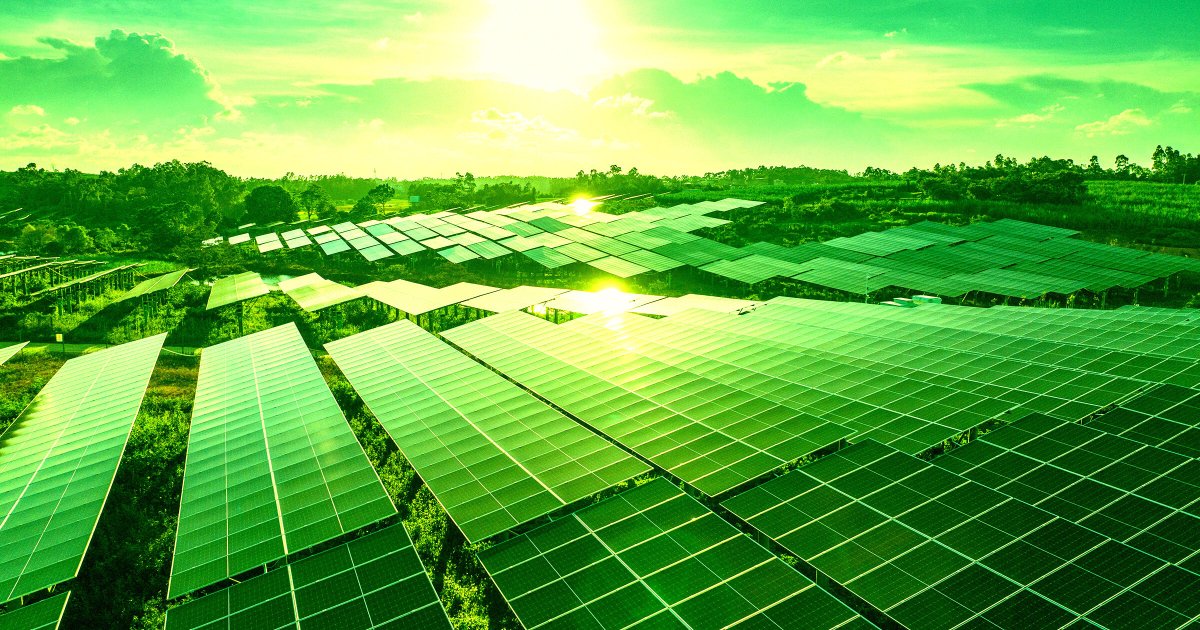
Turns out the sun has a few competitive advantages over nuclear: free fuel, no radioactive waste, and it doesn’t need a decade of permits before it starts shining. The real bottleneck now is grids and storage. Imagine losing the energy race to a giant fusion reactor 93 million miles away. 😎
To be fair the construction time on a star is actually a really long compared to nuclear.
It has its issues, but yeah currently it is the cheapest source of power, it got so cheep that individuals can build their personal power plant for their home.
And we still have idiots fighting it. Even if you don’t care about environment (you are “drill baby drill” kind of person) it still makes sense economically.
And turns out nuclear has a few competitive advantages over solar. They are both great and serve different purposes.
Nuclear’s big selling point is that the sun goes down. Batteries have apparently missed that memo: they keep getting cheaper, better, and more efficient. Storage won’t solve every grid problem overnight, but pretending today’s limitations are permanent is a strange way to plan tomorrow’s energy system.
another big selling point of nuclear is it’s easy to drop in at old coal plants that already have grid connections ready to go.
how long are you willing to wait for perfect energy storage?
obviously battery tech will improve, but the point is we cannot afford to assume that problem will be solved 100%, meanwhile experiencing more and more irreversible damage to our environment. We need to put our eggs into all clean energy baskets to get off CO2 as soon as possible. Not whenever battery tech happens to be ready to handle everything.
“it’s easy to drop at a place that has grid connections”
Funny, because solar or literally any other plant will also benefit from having existing connections, and all of them are easier and cheaper to build than nuclear.
Nuclear is dead but for niche applications.
Nobody’s asking us to bet on miracle batteries: Wind and solar paired with storage are already cheaper than building new nuclear. Reusing a coal plant’s grid connection doesn’t magically make a reactor cheap or quick to build. If speed and CO2 matter, follow the numbers, not the nostalgia.
“Cheaper” is not the most important metric.
In your world, is “tomorrow’s energy system” exclusively solar/hydro?
No, in my world tomorrow’s grid uses whatever delivers reliable electricity at the lowest total cost: solar, wind, hydro, geothermal, storage, and yes, nuclear if it can compete. This isn’t a religion with approved energy sources. It’s an engineering problem with a price tag, and nobody gets bonus points for glowing in the dark.
Exactly, this is an engineering problem. You’re talking it like it’s an accounting one. Reliability, emergency use, redundancy, generating potential and universal scalability are the most important factors. Cost is a completely separate issue governed by separate factors, many of which are 100% artificial.
You’re stringing worlds together at this point.
Cost is the single largest factor in the deployment of new power plants, and solar is just impossible to match right now.
You could spend literally decades and billions building a nuclear plant, or start deploying solar right this minute and immediately reap the rewards of that investment.
It’s a no-brainer.
But it doesn’t need to be one or the other. The more diverse the grid the better. I’ll also say again, cost on both sides is mostly artificial anyway.
where the fuck did anybody say that?
“Glowing in the dark” refers to nuclear power sources. Hope this helps.
Nuclear is simply incompatible with renewables, if the price tag is of any concern to you. Nuclear reactors take long and cost a lot to build, still aren’t cheap to operate if you include the infrastructure cost of getting, handling and storing the fuel, can’t respond to chaning demand quickly and are centralized.
Nuclear power plants need subsidies over their whole life, mainly to handle the risk inherent with nuclear fuel and the finincial risk of having to handle spent fuel for centuries to come. Nuclear power plants need to run at full power, which costs money every time renewables are pushing the energy price into the negatives. Nuclear power plants need a centralized power grid.
Renewables work in exactly the opposite way. They are cheap to build and maintain, they are variable and decentralized. So to use renewables effectively, you need to build a decentralized grid and ideall, on-premise energy storage.
Renewable energy simply wins in terms of cost, risk-management and scalability. So the energy grid of the future will be purpose-built to accomodate renewable energy. Trying to force nuclear energy generation into that mix only makes sense, if you have a clear, non-monetary reason to do so, like enriching uranium for bombs. For strictly commercial use, nuclear power is dead.
While very impressive, solar power is not the the ultimate power source.
For us in the nordic regions we don’t get enough sun during the winter just as we need it.
We still need nuclear power unless we make ourselves dependent on other nations for power generation and transfer.
Just look at how Russia tried to hold Europe’s supply of gas hostage after the 2022 invasion of Ukraine, I don’t want us to ever be so completely dependant on another nation/entity again.
“Oh, but we can use batteries!”
Sure, but batteries degrade over time, meaning we will need a continous way to replace them, and since most manufacturers of batteries are located in China (same goes for solar panels) we will just become dependent on China for our energy needs, so we have replaced Russia’s gas monopoly with China’s solar and battery monopoly.
Untill we have the ability to build and deploy solar panels and batteries at scale inside the EU we should be careful about giving up our current traditional powerplants.
Modern batteries degrade much slower than earlier generations did. Especially if you remove the size- and weight requirements of mobile batteries, we already have battery technologies that push a century in usable time.
Cool, I didn’t know that.
Batteries are largely recyclable and worth recycling, at least the ones of the scale used for grid-scale power storage.
And manufacturing can be done outside of china; it’s just a bit more expensive.
Do you realize how heavily Europe still depends on fossil fuels today? And that some of its nuclear reactors still use fuel supplied by Russia? If your big argument is avoiding dependence on hostile suppliers, swapping Russian gas for Russian nuclear fuel is a pretty spectacular blind spot.
Yes.
When did I mention using Russian nuclear fuel?
Sweden has actually a fair bit of uranium, we could mine it, have France process it and run our nuclear plants on our own fuel.
You may import turbines or panels, but no foreign government can turn off your wind or sunshine. Equipment supply chains can be diversified: imported fuel remains a recurring dependency. That’s a pretty important difference.
I just mentioned that we have the fuel and the enrichment facilities in the EU…
Having enrichment facilities doesn’t mean controlling the entire nuclear fuel cycle:
France still imports Russian enriched uranium and relies on Russia to convert and enrich recycled uranium. Longstanding contracts and missing European processing capacity explain why. Energy independence is clearly more complicated than owning uranium deposits.
A reactor needs an industrial fuel supply chain, while wind and solar need no fuel imports once installed. Nobody can embargo the breeze. If energy independence is the goal, why treat fuel free generation as an afterthought?
I feel like we have strayed too far away from my main point, solar doesn’t work when it is dark outside.
It is dark for long streaches of time in the Nordics.
When it is dark, we use more energy to heat and light our homes.
Batteries can’t supply enough power during that time.
Importing power is expensive.
So domestic power generation it is, and since nuclear power is one of the most environmentally friendly power sources we have and will work in the dark, it makes sense to use it to complement renewables.
There’s more than solar and batteries or nuclear. We need cheap reliable energy. And thankfully there’s plenty.