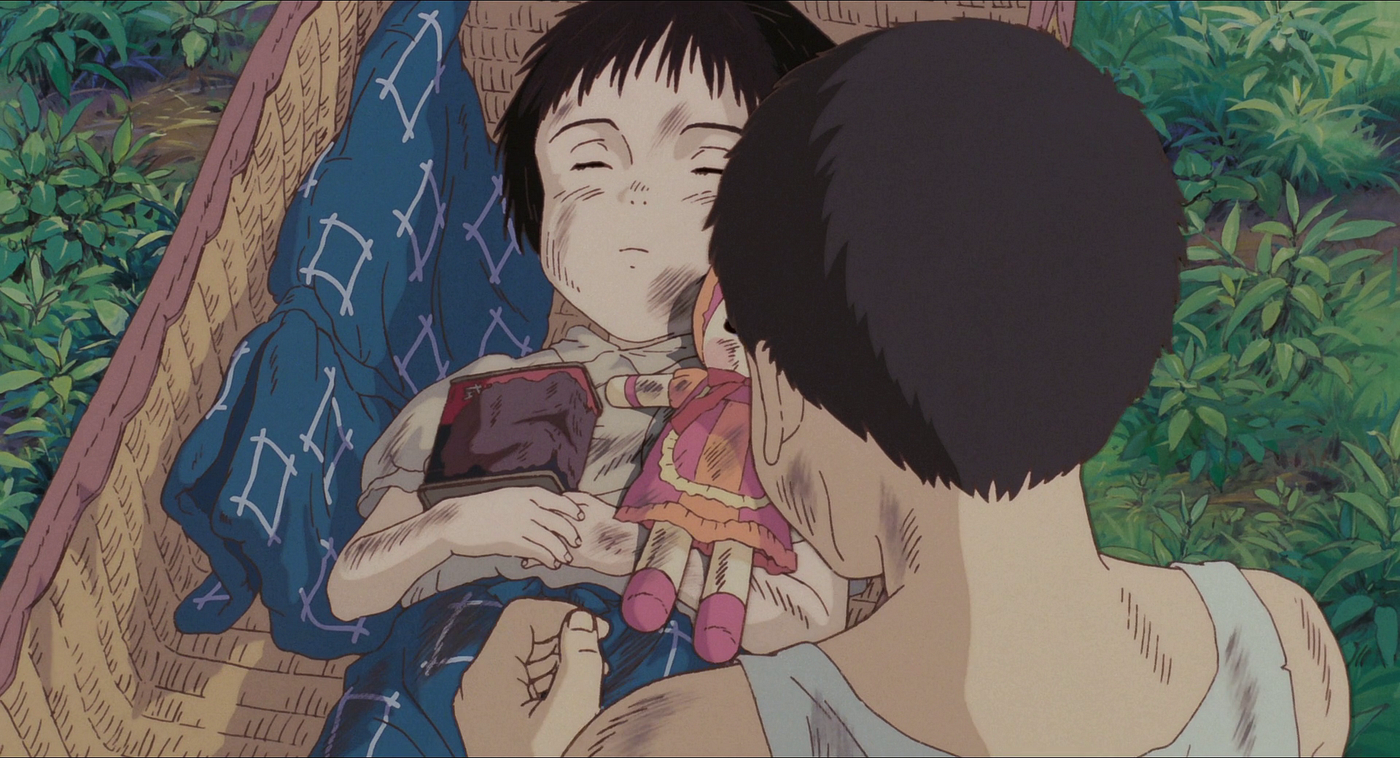
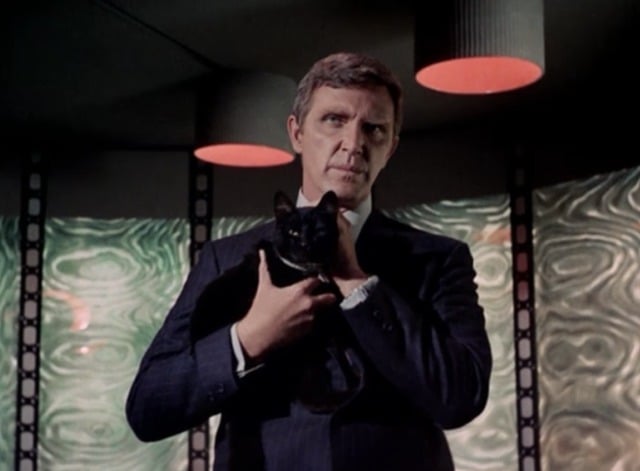
Firstly, I’m sorry for the emotions, my childhood turning point evokes. The pic is an example of mine. I wasn’t going to include it, but I feel like it gives a good visceral example of deep messages in movies (of course actual philosophy, and non emotionally devastating examples apply, too). I just watched a clip on a study on some elderly men, taken to a time warp hotel, and asked to pretend it was that time, and it had huge positive effects on their physical capabilities and mental capacity. And it reminded me of the power of hope, it’s not just embedded in the happy ending, where everything works out ok. Or the promise of it. Hope is also the core of resilience, necessary for driving each step that carries you along the yellow brick road.
I’ll share mine here, so you get an idea what I’m asking. I was devastated watching the scene above, as a kid. But also, I saw Atreus ability to keep going, not only not giving up, and therefore not sinking in a place that takes you if you do, but then also carrying the weight of the grief of his life companion. And he was now alone, realising his mortality and facing, what he is told, are impossible odds. He still keeps going. I think, to child me, there was so much power in seeing something is possible. I believed I, too, could survive anything. And even if I were alone, I could still survive anything, because that power came from inside me, no one can take that from you. “Don’t let the darkness take you” the darkness is an external force. It wants to creep in and convince you to buy it’s snake oils.
There is so much power in convincing people the “darkness” is inevitable, there is nothing else. I see it all around me, embedded in the propaganda, convincing us not to resist, that resistance is futile. Half of the battle is in our own heads, and the brainwashing swamps we wade through, now.
What are your tools of resilience, your keys for undoing the fight or flight, all the horrifying videos around us are designed, to evoke, to keep our thinking brains detached, and only our “run hide” brains active, so we can’t think, so we can’t plan, so we just sink in and accept?
What’s helped you get back up, when you have fallen? From whatever sources, I just feel like, maybe now is a time, it’s important to share a shoulder to cope on. Or even just moved you, to an extent it changed your perspective or way of thinking?
The book Enders Game. I was will bullied in grade school. As was Ender. The overall theme is that it’s effectively impossible to maintain a defensive posture indefinitely. Be that always ready for dealing with bullies at school or home, to dealing with an alien threat becoming nearly impossible in three dimensions.
Ender comes up with the philosophy that you have to win, but not just win that fight/battle, you have to win so decisively that there won’t just be another fight later. While this turns out to be effective, it also results in genocide.
This resulted in a restrained version of the philosophy in me. When diplomacy fails, fight for your life, but know when you’ve won, know when you’ve prevented the next fight(s). And most importantly, know when to stop.
Speaker for the Dead really took the lesson Ender learned to a new level. Shame about the author being a douchebag because those were some formative tales for me.
It’s so weird that he’s so homophobic. Ender’s Game is incredibly chock-full of homoeroticism.
I mean… Not that weird. Have you seen the grindr stats when the RNC is in a city?
 All you need is 1 happy thought
Nobody tell them how it went for Robin…
That he died of suicide caused by depression decades after the movie was released? What do you want to say ?
His suicide wasn’t caused by depression. It was caused by progressing Lewy body dementia, which has a whole bunch of shitty effects, and depression is just one of them. His disease also wasn’t properly diagnosed until the autopsy.
Ran out of happy thoughts
That it’s true doesn’t make it funny
Williams’ suicide was caused by a severe form of progressing dementia, with which depression is just one possible effect. It was also misdiagnosed, so he didn’t know for sure what kind of shit he was dealing with, just that it majorly sucked.
Robin has millions of people happy thoughts. He deserves better than your pathetic im14andthisisedgy crap.
The Matrix really made me understand where Descartes was coming from. When we say something is “real” it’s always subjective and cannot be objective. That’s an incredibly difficult concept for most humans to truly grasp.
It’s a great connection. Beyond Descartes, the Wachowskis explicitly cited Buddhist philosophy as a primary influence, specifically the concepts of Maya (illusion) and Samsara (the cycle of suffering which people unfortunately tend to misunderstand a lot).
The “There is no spoon” scene is a direct nod to Sunyata, or emptiness. It suggests that “reality” isn’t just subjective; it lacks inherent existence. In this view, it’s not just the world that is a construct, but the “self” perceiving it as well. Lana Wachowski has also stated that the trilogy was designed as a “meditation” on the nature of choice and the self, influenced by their interest in Eastern philosophy.
There’s also an Upanishadic mantra in the third movie soundtrack, appropriately:
Asato mā sad gamaya (from the unreal, lead me to the real)
Tamaso mā jyotir gamaya (from darkness, lead me to the light)
Mṛtyor mā’mṛtaṃ gamaya (from death, lead me to immortality)
Unpacked here (a bit, but it’ll correct the likely, immediate misconceptions people unfamiliar with eastern philosophy would get)
We learned that in school, movies like that taught me that it was a difficult concept for humans to grasp.
Billie Eislish did say it more succinctly though, damn.
Wut?
Literally just a line in one of her songs, nothing deeper.
I’m still unsure what you were referring to, though. I know one of her songs, that’s it
The concept of Leaver and Taker societies throughout history as laid out by Daniel Quinn in Ishmael and The Story of B opened my eyes (further) to what a cancer capitalism and inequality are to the world.
Dune taught me esrly lessons on the interconnectedness of life.
Kurt Vonnegut taught me to laugh at just how absurd we walking sacks of chemicals can be. I also learned about Humanism because of him.
George Carlin taught me gallows humor in the face of a society that was not formed with people’s welfare in mind.
Douglas Adams and Terry Pratchett taught me it’s nkt only ok to be silly, sometimes it’s the only apropriate thing to do.
Monty Python taught me that life’s a bit absurd, and death’s the final world.
There’s lots more but these are the ones that came to mind immediately.
The concept of Leaver and Taker societies throughout history as laid out by Daniel Quinn in Ishmael and The Story of B opened my eyes (further) to what a cancer capitalism and inequality are to the world.
I always found the idea of the garden of eden story being a warning about the takers that made it into their culture kind of fascinating.
The ending of Chinatown really prepares you for a world where evil assholes own everything and continue to get away with anything.
Also, extremely ironic in that way.
Helms Deep is pretty much an ode to fighting back against overwhelming odds and the power of hope. That battle combined with Sam’s words about goodness being worth fighting for. Also, Gandalf’s words in Fellowship about choosing what to do with the world given to you has always stuck with me as motivating words when things seem bleak.
I also really enjoyed the scene in Everything Everywhere All at Once where Waymond talks about how kindness is a strength.
Could probably keep going but those are standing out to me today.
Chinatown holds up so well to modern viewing. Incredible film. When I first watched it I had already heard that last line used over and over as a joke in general culture. Hearing that line for the first time in context is like a punch to the gut. One of the best endings ever.
Not even reading your comment(cuz maybe spoilers) but I saw you’re talking about Chinatown and I’ve been meaning to watch it, so I will be doing that tonight! Thanks for the reminder!
This classic xkcd led me down a long rabbit hole years after reading it that ended in the belief that the universe itself is an abstract instantiation of pure mathematics, and exists only in the sense that any such self-consistent mathematical structure must exist from its own point of view. I won’t get into the details here because it’ll turn into a long incoherent rant, but the general gist is that the idea in the comic should work - but then that the rocks themselves aren’t even necessary: The fact that a universe can exist is enough for it to exist, even if no one ever simulates it. Just like the question “What is the 10^(10^100)th prime number?” exists and has a definite answer, even though nobody will ever and can never calculate it, the answer to “What does a universe, with these initial conditions, and these laws of physics, look like at t = 13.7 billion years?” has an answer too, and it looks like you reading this comment.
Darlin’, forever is a long, long time. And time has a way of changin’ things.
The Fox and the Hound
Camus’ The Stranger really spoke to me. It sort of felt like it described me in ways that I hadn’t known until I read the story.
Mostly, I could tell, I made him feel uncomfortable. He didn’t understand me, and he was sort of holding it against me. I felt the urge to reassure him that I was like everybody else, just like everybody else. But really there wasn’t much point, and I gave up the idea out of laziness.
At that time, I often thought that if I had had to live in the trunk of a dead tree, with nothing to do but look up at the sky flowing overhead, little by little I would have gotten used to it.
In that night alive with signs and stars, I opened myself to the gentle indifference of the world. Finding it so much like myself–like a brother, really–I felt that I had been happy and that I was happy again.
Threads and The Day After taught me that there are people out there that would rather be right, than alive.
Threads and Where the wind blows taught me that there is no living after a nuclear war. Just a excruciating decline and collapse
CoCo fundamentally changed the way I think about death and the value of memory. I went into it knowing almost nothing about Día de los Muertos, so I wasn’t expecting it to affect me as deeply as it did.
The idea that someone can disappear forever only when they are no longer remembered hit me in a way I wasn’t prepared for. It was such a sad thought, but strangely comforting too. Sad because it means there is a kind of “second loss” that can come with time, but comforting because it suggests that the people we love are never truly gone as long as we carry them with us, speak their names, and keep their stories alive.
That idea stayed with me long after the movie ended. It made death feel less like a hard ending and more like a responsibility of love through memory.
Plus, the music is amazing.
That movie was recommended to me by several Mexicans when I was in Mexico a few days before the holiday. It seems they did an excellent job representing the meaning and the spirit of the celebration. So the cool thing is you do, now, know Dios de Los Meurtos.
Beautiful movie.
Plus it introduced me to the song La Llarona (covered by many people) for a haunting October sound
Artax? Really? Fuck you!
You didn’t have to post this shit but you chose violence. Fuck you for making me cry in a holidayYeah fuck that shit. I was on a good stretch of not thinking about Artax death for I don’t know 1 or 2 years and this post comes from nowhere like sucker punch. This is like the twisted version of The game. Dammit.
For me it was the unalterable cyclic time travel in 12 monkeys, coupled with the rebellious themes. That movie hit hard and made me think when i was young (probs like 10?). Hands down favorite movie, and i credit it with a lot of my philosophical view of the universe. I believe everything is deterministic, and if you were to know all the information about every atom in the universe at any slice of time, you could entirely predict the future. Its completely untestable, of course, but it makes sense to me. After all, everything is physics.
But then there’s quantum physics
Thats fine, if you have the power to know where every atom in the universe is at a given time, as well as its trajectory and momentum, it would still be knowable. You’d need to have some pretty damned advanced knowledge for that anyway, so from a practical standpoint it doesn’t matter that we couldn’t reconcile it with our present models. They could be completely wrong, for all we know.
In a way the universe does know the position and momentum of every particle… I feel known
We are the universe’s attempt to study itself. Introspection, writ large :)
This led me down a neat rabbit hole
If you haven’t seen it I’ll recommend you give Devs a watch. It’s a compelling take on a similar theme.
Mine are from movies which you wouldn’t expect to get sage advice
Shanghai Noon “That which you promised, you must perform”. Jackie Chan’s character says this at one point and it really stuck with me since I was a child. It’s a broken English version of “your word is your bond”. I never promise something to someone that I can’t accomplish. It does drive some people I know a little crazy.
“You never see the hard days in a photo album, but those are the ones that get you from one happy snapshot to the next”. This radically changed the way I perceived the world. It helped me accept that it’s really hard to grow as an individual in life without strife.
“People shouldn’t be afraid of their governments. Governments should be afraid of their people.” -V for Vendetta
I used to think about governments in terms of the things I had to do for them (pay taxes, jury duty, carry my license while driving) or else what they’d do to me (fines or jail, usually). This quote helped me understand that this transaction is not one-way and that if a government fails its people then the people should hold it accountable.
Whether that’s healthy for a given person, realistically possible, or if there’s enough people who’ve been wronged to hold it accountable are different questions, of course.
That Japanese one from the Ghibli movies.
Edit: the ideology i mean.
So whimsical!